
Advice for Getting a Headshot
I’ve been on both sides of the camera. I spent years trying to make it as an actor before and after standing behind the lens, photographing others trying to do the same thing. That experience gives me a perspective most photographers don’t have. I know what it feels like to hand someone a headshot and hope it opens a door. Oh, and I’ve spent some time in the business world as well, and with LinkedIn being a stop for potential employers, I’ve got some experience with what they are looking for as well.
Black and White or Color
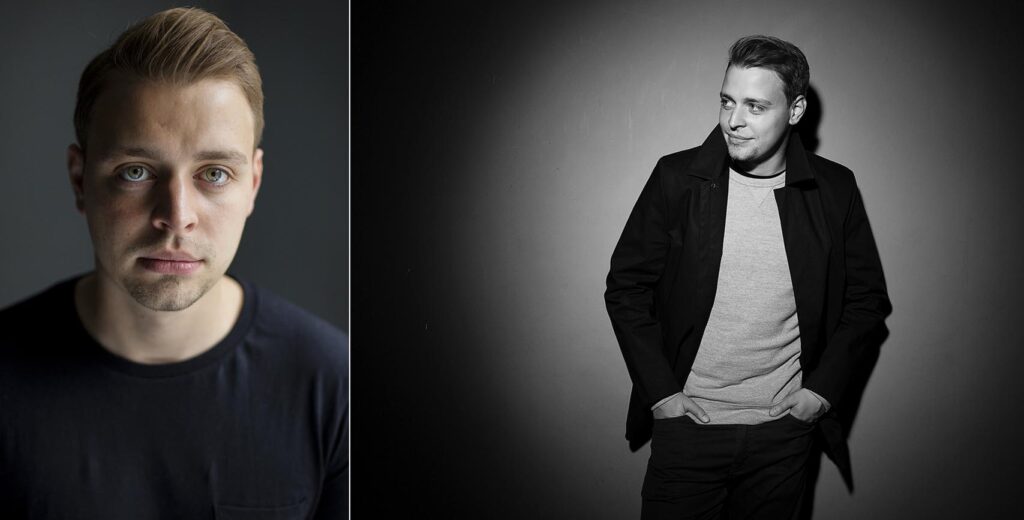
When I started out as an actor, black and white was the standard. You printed your headshot, stapled your resume to the back, and that was that. Those days are gone. Color is now the industry standard for audition submissions. And casting directors expect it. If you love black and white save it for your online profiles or use it as a thank you card after a callback. It photographs beautifully and stands out in a non-audition context. Just don’t lead with it when you’re trying to get in the room.
Clothing
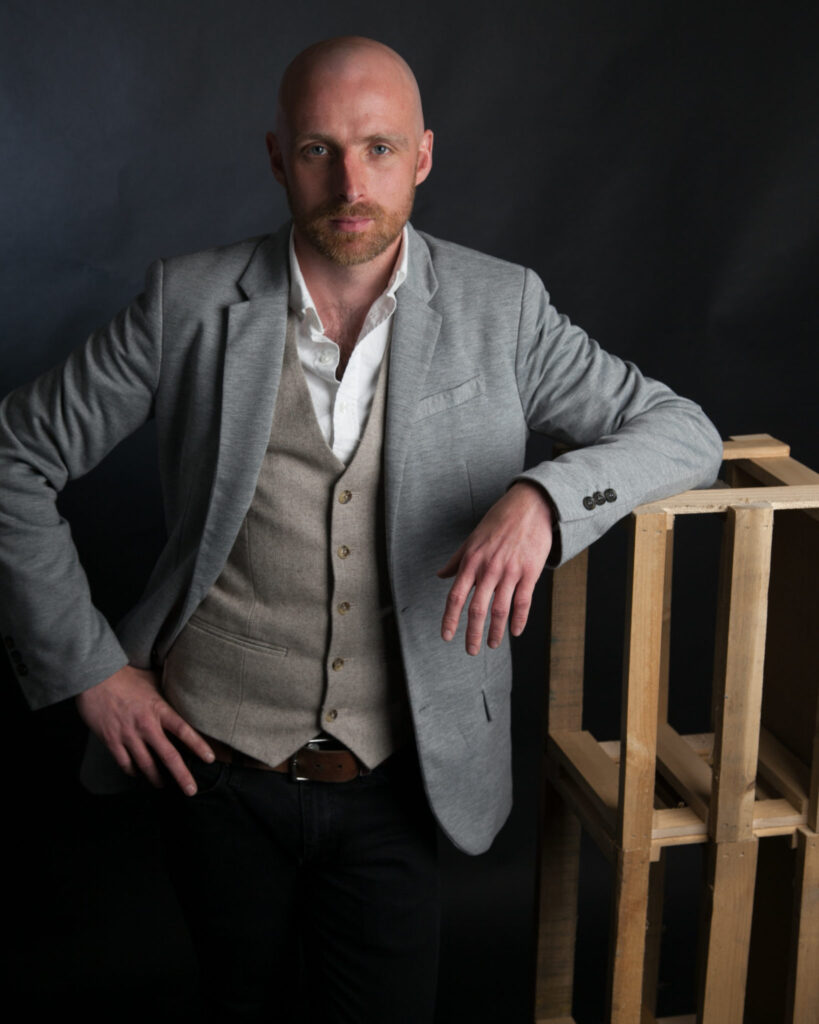
Go with solid colors. Avoid busy patterns, because they pull the viewer’s eye away from your face, and your face is the whole point. Stay away from solid white and bright red as well; white tends to blow out under studio lighting and red can create color casts on skin. Instead, lean into tones that work with your complexion: browns, light pinks, blues, grays, greens, and in some cases black. Your clothes should support your face, not compete with it. The same goes for jewelry. Leave the statement pieces at home. If someone looks at your headshot and notices your necklace before they notice your eyes, something has gone wrong.
Border or No Border
I’m in the border camp. There’s something that reads as intentional and professional about a clean white border around a print. It frames the image the way a mat frames a photograph on a wall. If you have an agent, the lower border is also a practical place to put their contact information. That said, if you have representation, defer to them on this one. They know what they want on the materials they’re handing out.
Gloss or Matte
Go matte. Full stop. A gloss finish is for family portraits you’re going to frame and hang above the mantle. A headshot is a professional document. Matte reads that way. It also handles better. It doesn’t pick up fingerprints, it sits flat in a stack, and it doesn’t create glare under office lighting when a casting director is flipping through a pile of them.
Posing and Framing
The purpose of the image is to show who you are using your face. Simple as that. Don’t get so close to the camera that you crop the top of your head. Yes, it emphasizes your eyes, but casting wants to see your hair too. They’re picturing you in a role before they’ve met you. Get your shoulders in the frame, but stop there. They can gauge your build well enough from the head and shoulders; you don’t need to give them more than that.

For guys, crossed arms actually work well in a headshot. I know it has a reputation for looking closed off, but in a framed image it reads as confident and gives the photo some structure. For women, I’d recommend something softer. A hand crossing toward the other arm tends to frame nicely without the same energy. And look at the camera. Your eyes should be the first thing anyone sees when they look at the image.
If you have a beard in your photo, show up to the audition with that same beard. Don’t make them wonder if they called in the right person.
Smile or No Smile
This one comes down to how you want to be seen. If you’re going to smile, make it genuine. A forced smile reads immediately, and it will undermine every other thing you’re trying to communicate. If you’re not going to smile, that’s completely valid, but don’t fill the space with a frown or a scowl. Unless that’s a very deliberate creative choice, it tends to limit the types of roles you’ll be called in for. Think of your expression as the first line of your audition. What are you saying before you’ve said anything?
Portrait or Landscape
My default recommendation is portrait orientation, and it has been for a long time. That said, this is one area where the industry is shifting, and I’m seeing more landscape headshots than I used to, particularly for actors with a strong online presence. Before you decide, talk to your photographer about where the images will be posted. For corporate headshots, portrait is almost universally expected. For actors, the honest answer is to look at what working actors in your market are doing, or ask an agent or casting director directly. Whatever you choose, make it a deliberate choice, not an accidental one.
Backdrop
In the studio I use a combination of grey, white, and black backdrops to give clients options. My default recommendation is grey. The backdrop should be invisible, or close to it. The moment a viewer has a thought about what’s behind you, you’ve lost them. Grey sits neutrally behind almost any skin tone and any clothing choice. It doesn’t compete. If someone looks at your headshot and thinks ‘oh, nice grey backdrop,’ that’s still too much. It should just disappear.
Look Unique, Look Natural
Here’s the part no checklist can fully capture. With all these guidelines around clothing, framing, and format, how do you actually stand out? That’s the question, isn’t it? Don’t look at the camera the way you’d look at a DMV lens. Your eyes are the window into your personality, so use them. If you’re the wacky, charismatic guy in every room you walk into, let that come through. If you’re the serious, intense type who gets cast as the detective or the surgeon, commit to that. Just make sure it’s genuinely you and not a character you’re playing for the photo. Casting directors have seen millions of headshots. They can tell.
I know actors are reluctant to get typecast, and I understand that. Everyone wants range. But when you’re starting out, range is a luxury. Pick the version of yourself that is most marketable and lead with it. When you’re famous, you can change things up.
If this is for business purposes, focus on looking professional. This isn’t as much about showing your personality as it is about helping you get hired.

Your Shot Before the Shot: Prep Day
How you show up to the shoot matters more than most people realize. Get a full night of sleep because the camera will notice if you didn’t. Drink water the day before. Avoid anything that makes your face puffy (alcohol, sodium-heavy food, a night out at the dance club). If you’re getting a haircut before the shoot, do it a few days out, not the morning of. Fresh haircuts often look a little too fresh in photos. You want to look like the best version of your everyday self, not like you just came from the salon.
Makeup
For women, I’d always recommend wearing makeup for a headshot session. The key word is natural. It should look like you on a good day walking into an audition, not you getting ready for a night out. Studio lighting is unforgiving, and a little polish goes a long way. Some men also choose to wear makeup for a shoot, and there’s nothing wrong with that. The rule is the same: if you’re wearing it, it should be invisible. Use it to reduce shine or address anything you’d rather not have the camera catch. Don’t use it to look younger or dramatically different. The headshot needs to look like you, because you are eventually going to walk into a room.
Relax
This might be the most important item on the list. If you can’t relax in front of a single photographer in a quiet studio, ask yourself how you’re going to handle an audition room full of people waiting to judge you. The shoot is practice. Treat it that way. A good photographer will help you get there, that’s part of the job, but you have to be willing to let go of whatever is making you stiff. The camera reads tension instantly and mercilessly.
Keep It Current
If you walk into an audition and don’t look like your headshot, you’ve created a problem for yourself before you’ve opened your mouth. A headshot should be updated every couple of years at minimum, and sooner if you change your hair, grow or lose a beard, or do anything else that alters how you present. It’s not a portrait for your wall; it’s a business card, and it needs to be accurate.
The headshot is your first impression. In many cases, it’s the only impression you get before someone decides whether to call you in or not. Treat it with the same seriousness you’d give an audition, because the headshot is what gets you that audition.